

It started by using the power the of Figma's variables. The team developed multiple variable libraries in a setup that included over 400+ colours, 100+ typography stylings and 100+ sizes. This allowed users from all aspects of the news team to create designs that were consistent and specific, while the management of the these values could be controlled by the systems team in the background.
It also allowed systems to enhance existing component libraries across Web, TV and Social. By adding precise colour, spacing and typography styles it meant everything new and old could be aligned. Using variables also introduced light and dark modes easily for all components.


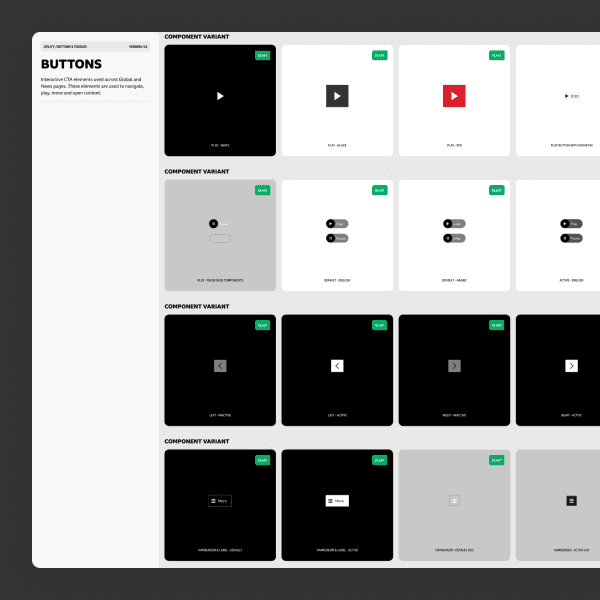
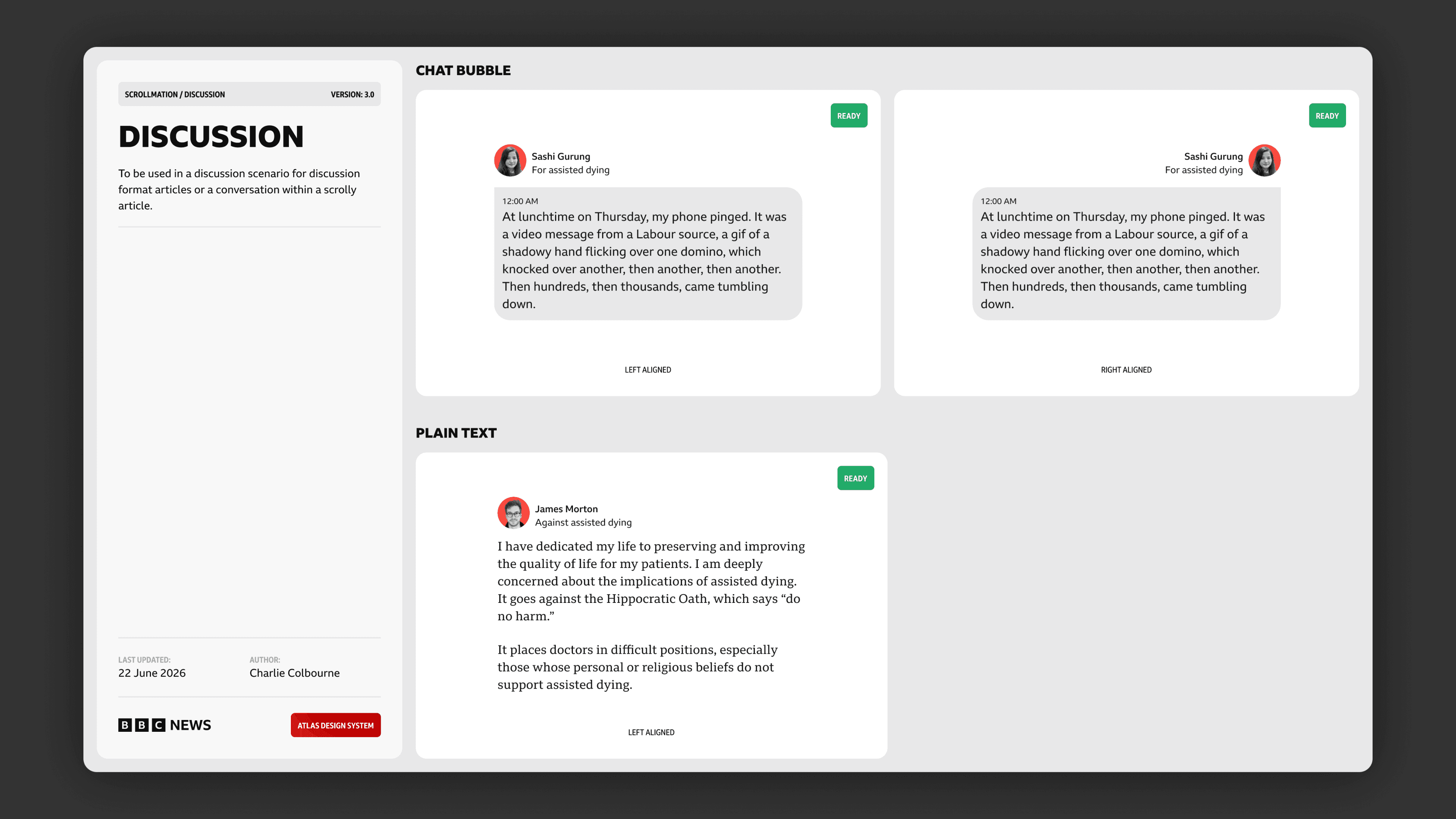
Alongside this was the integration of new UI templates for components and general documentation. These used Figma's 'slot' feature that allowed templates to be uniform, while allowing users to speed up the way they document. They also encouraged more ownership for users by adding names, dates, component information and versioning data.
Working with different departments allowed the systems team to work out ways to connect external projects to designs and documentation in Figma, whether this was creating pixel perfect templates for developers to pull into software or helping designers with setting up quicker processes. By tying them into Figma and Atlas it meant it could be achieved quicker than ever.

Across the year, Atlas went from focusing on individual component libraries, to a fully flourished system that had touch points with web designers and developers, social teams, branding teams, TV specific services like broadcast and iPlayer, more niche teams across radio and internal services. The highlight for systems throughout the year was being the focal point of the entire BBC News YouTube rebrand, designing visual language and templates that would be rolled out across the whole of the BBC.